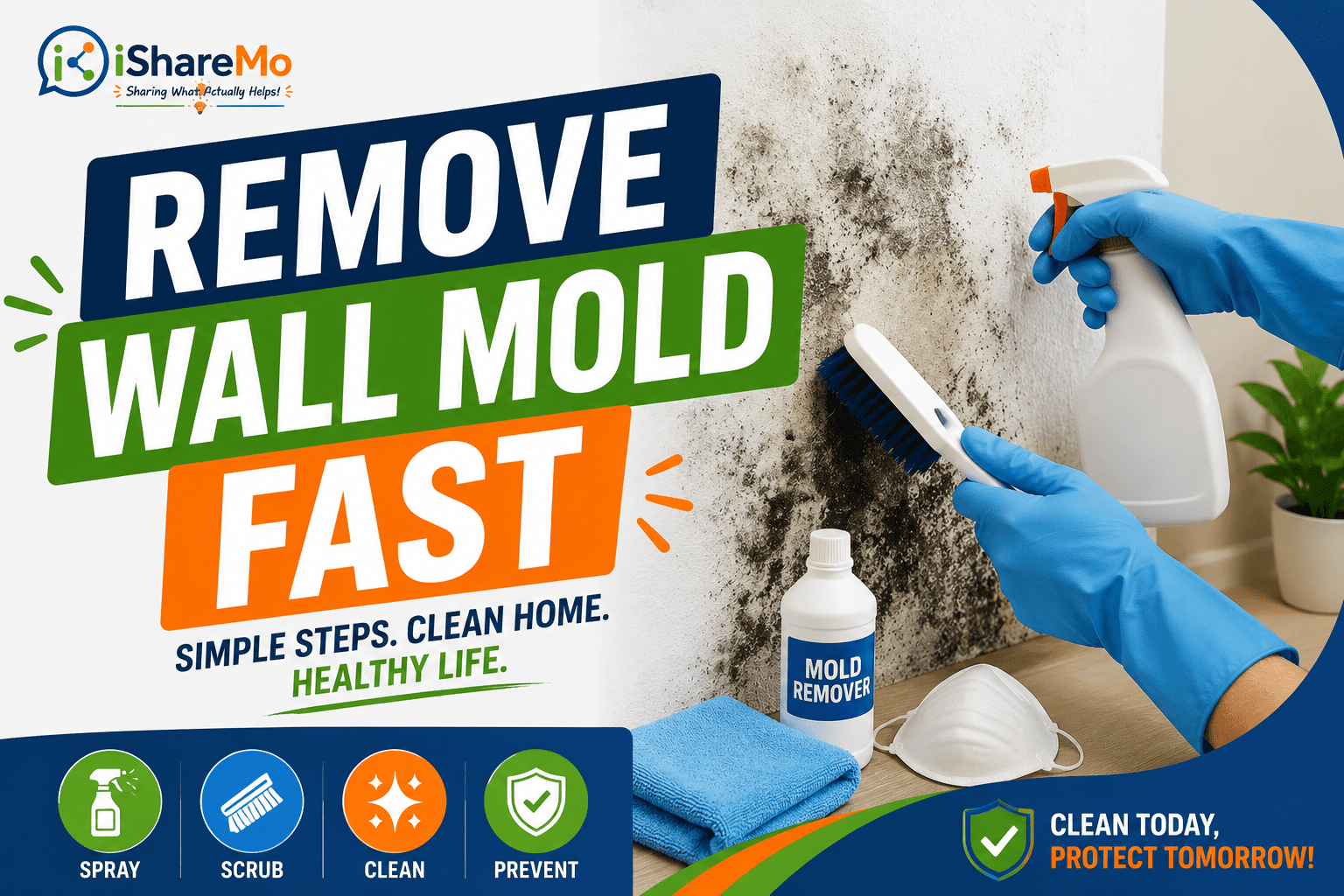
Learning how to remove mold on walls is important because mold can spread quickly and affect both your home and health. Many homeowners notice black spots or unpleasant smells but are unsure how to clean them properly.
The good news is that small mold problems can often be cleaned safely at home using simple tools and proper techniques.
Quick Summary
How to remove mold on walls starts with identifying moisture problems and cleaning affected areas safely. This guide explains the common causes of wall mold, basic cleaning methods, and ways to reduce moisture that allows mold to grow. You’ll also learn important safety tips and when mold problems may require professional help. Understanding proper mold removal can help protect your home, improve indoor air quality, and prevent future wall damage.
If the moisture problem is not fixed, the mold will likely return even after cleaning.
Signs You Have Mold Problems
Some mold problems are easy to spot, while others are hidden.
Common signs include:
Black or green wall spots
Musty smell
Peeling paint
Damp surfaces
Allergy-like symptoms indoors
Catching mold early helps prevent bigger damage.
Simple Steps to Clean Mold on Walls
1. Wear Protective Gear
Before cleaning, protect yourself properly.
Use:
Gloves
Face mask
Eye protection if needed
Mold spores can irritate the skin and lungs.
If you don’t have cleaning gloves yet, using basic protective gloves can help make cleaning safer.
2. Improve Ventilation
Open windows and improve airflow before cleaning.
Good ventilation helps reduce moisture and prevents mold spores from spreading around the room.
Fans can also help improve airflow during cleaning.
3. Prepare a Cleaning Solution
You can use:
White vinegar
Mild detergent
Mold remover solution
Avoid mixing strong chemicals together.
For small mold spots, vinegar is often enough for basic cleaning.
If the mold is difficult to remove, using a simple mold remover spray can make cleaning easier.
4. Scrub the Mold Gently
Use a soft brush or sponge to clean the affected area.
Do not scrub too aggressively because this can damage paint or spread mold spores.
Wipe the area slowly and carefully.
5. Dry the Wall Completely
After cleaning, dry the wall fully.
Moisture left behind can cause mold to return quickly.
You can use:
Electric fan
Dry cloth
Dehumidifier
Keeping walls dry is very important.
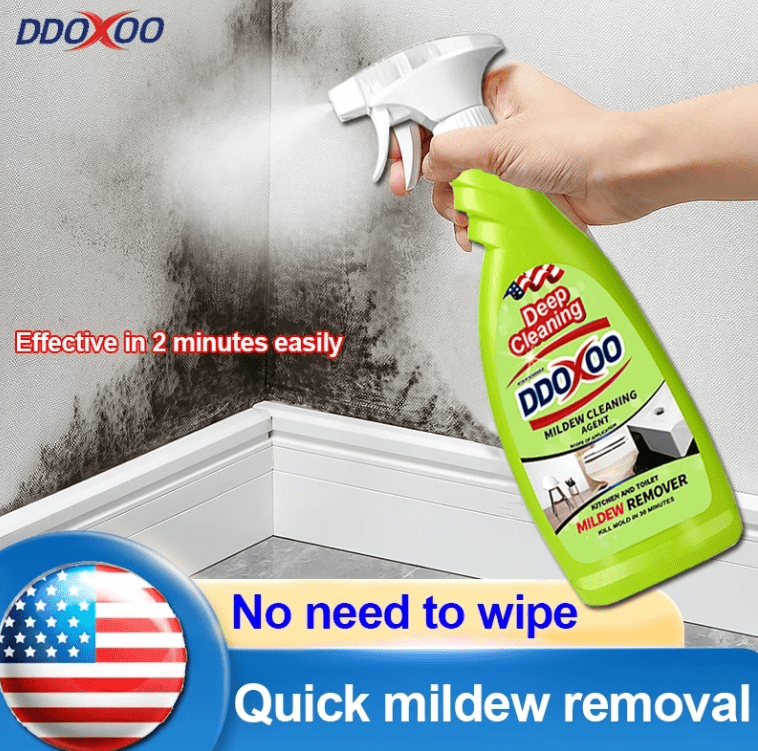
6. Use a Mold and Mildew Remover Spray
If the mold is difficult to remove using basic cleaning solutions, a mold and mildew remover spray can help make the cleaning process easier and faster.
This spray is designed to break down stubborn mold on walls and help restore the original appearance of the surface.
If you need a ready-to-use solution for wall mold problems, you can check a Mold and Mildew Remover Spray here: Quick Molds and Mildew Remover Spray
This guide is for small and manageable mold problems only.
If mold covers large areas, keeps returning, or is caused by major water damage, it is safer to contact a professional. Severe mold problems may require deeper inspection and specialized cleaning.
Common Mistakes to Avoid
Avoid these common mistakes:
Painting over mold without cleaning it
Ignoring moisture sources
Using too much water while cleaning
Cleaning without protective gear
Proper cleaning and moisture control are both important.
Large mold problems can sometimes hide deeper structural issues.
FAQs
Is mold on walls dangerous?
Small mold spots are usually manageable, but large mold growth can affect indoor air quality and health.
Can I clean wall mold myself?
Yes, small mold areas can often be cleaned safely using proper protective gear and cleaning methods.
What kills mold on walls naturally?
White vinegar is commonly used for basic mold cleaning.
Why does mold keep coming back?
This usually happens because the moisture source was not fixed.
Can painting over mold solve the problem?
No. Mold should always be cleaned properly before repainting.
When should I call a professional for mold?
If mold covers large areas or keeps returning repeatedly.
Conclusion
Learning how to remove mold on walls properly can help protect your home and improve indoor air quality. The key is not only cleaning the mold but also solving the moisture problem causing it.
For small mold issues, simple cleaning methods can work well. But for serious cases, it’s always safer to seek professional help.
Join the Discussion
Have you experienced mold problems at home or found effective ways to prevent it?