Home»Latest Updates»
Senate Website Defaced: What Happened, What Authorities Said, and Why Cybersecurity Matters
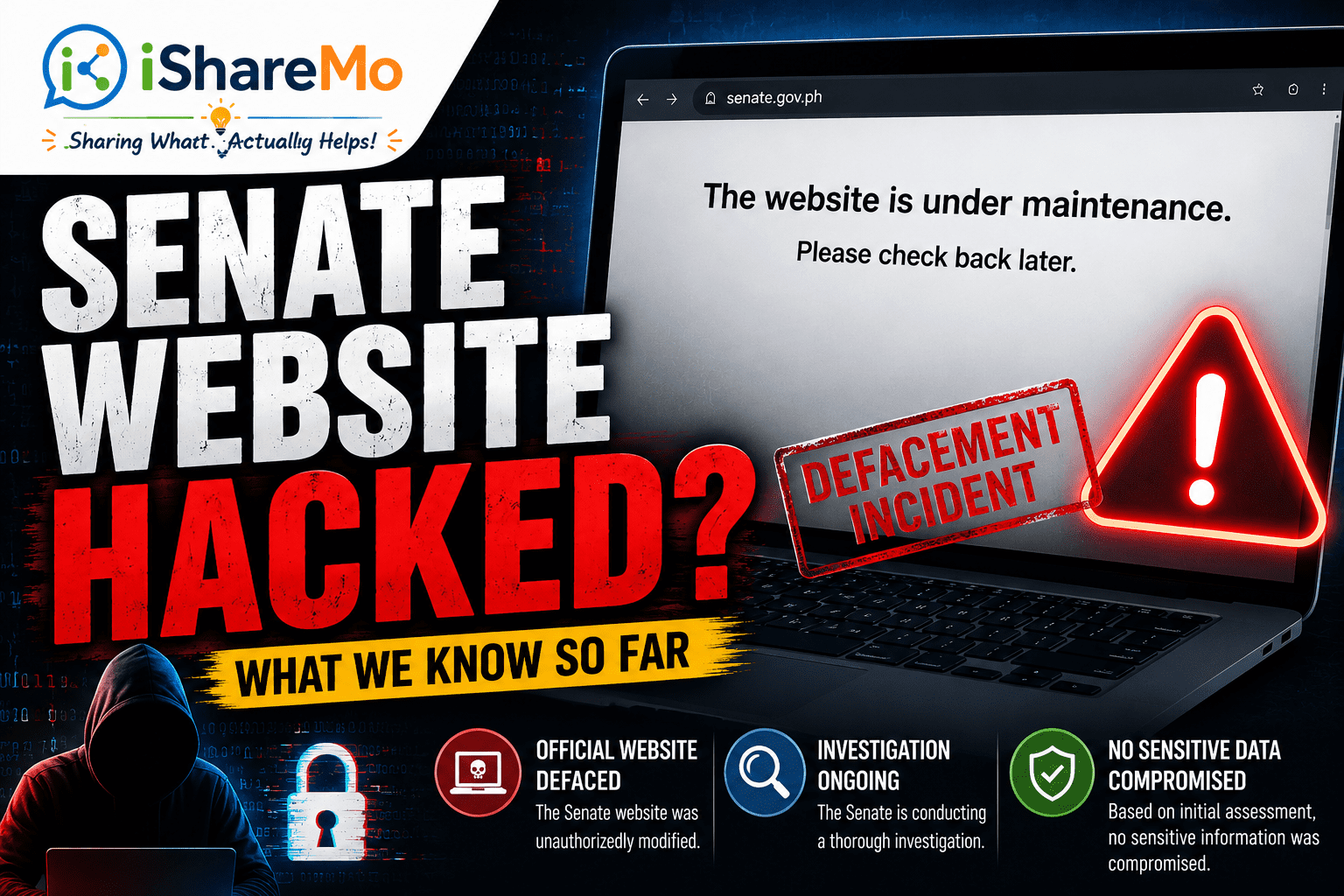
The official website of the Senate of the Philippines recently became the center of public attention after visitors discovered that it had been subjected to a website defacement incident.
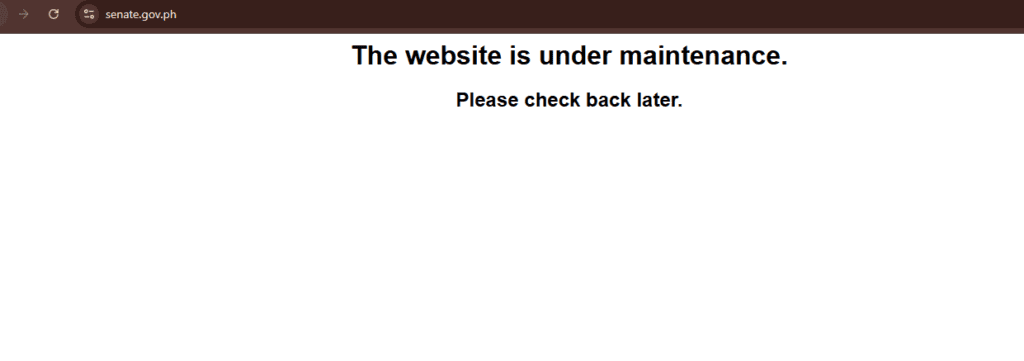
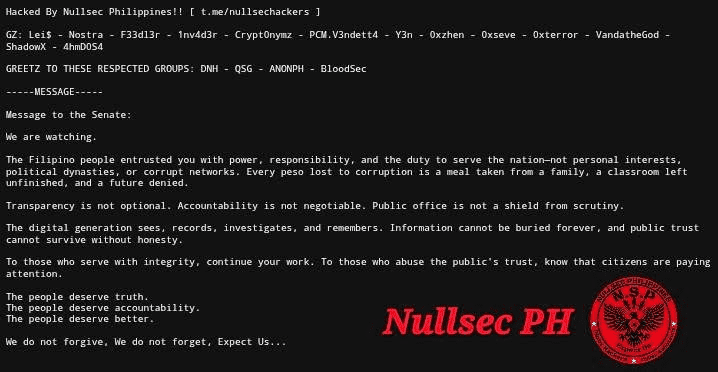
Screenshots circulating online showed the Senate website displaying unauthorized content before the site was temporarily taken offline and placed under maintenance. Shortly after, a group identifying itself as “Nullsec Philippines” publicly claimed responsibility for the incident.
As discussions spread across social media, many Filipinos began asking the same questions: Was the Senate website hacked?Was sensitive information exposed? What exactly happened?
Here’s what we know so far based on official statements and publicly available reports.
Quick Summary
The Senate of the Philippines confirmed that its official website experienced a website defacement incident. The site was temporarily placed under maintenance while technical teams initiated security protocols and conducted an investigation. A group calling itself Nullsec Philippines claimed responsibility, although authorities have not publicly attributed the incident to any specific individuals beyond those claims. The Senate stated that, based on its initial assessment, there was no indication that confidential or sensitive information had been compromised.
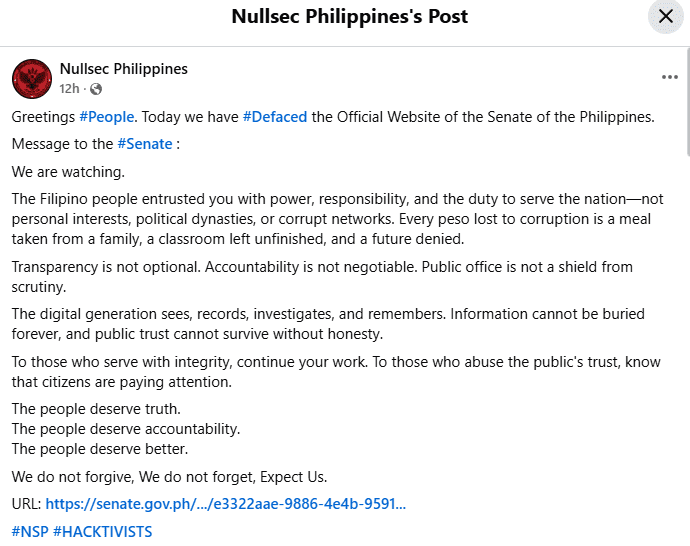
Around the same time, social media posts from a group identifying itself as Nullsec Philippines claimed responsibility for the defacement. The group shared screenshots allegedly showing the altered website along with a message addressing issues of transparency and accountability.
The incident quickly gained attention online, raising concerns about the security of government websites and digital infrastructure.
What Is a Website Defacement?
A website defacement occurs when unauthorized individuals alter the appearance or content of a website without permission.
Unlike some cyberattacks that focus on stealing information, defacement incidents are often intended to:
Display messages;
Gain attention;
Promote a cause;
Demonstrate vulnerabilities; or
Damage public trust.
However, a website defacement does not automatically mean that sensitive databases or confidential records were accessed.
The scope of each incident depends on how the attackers gained access and which systems were affected.
What Did the Senate Say?
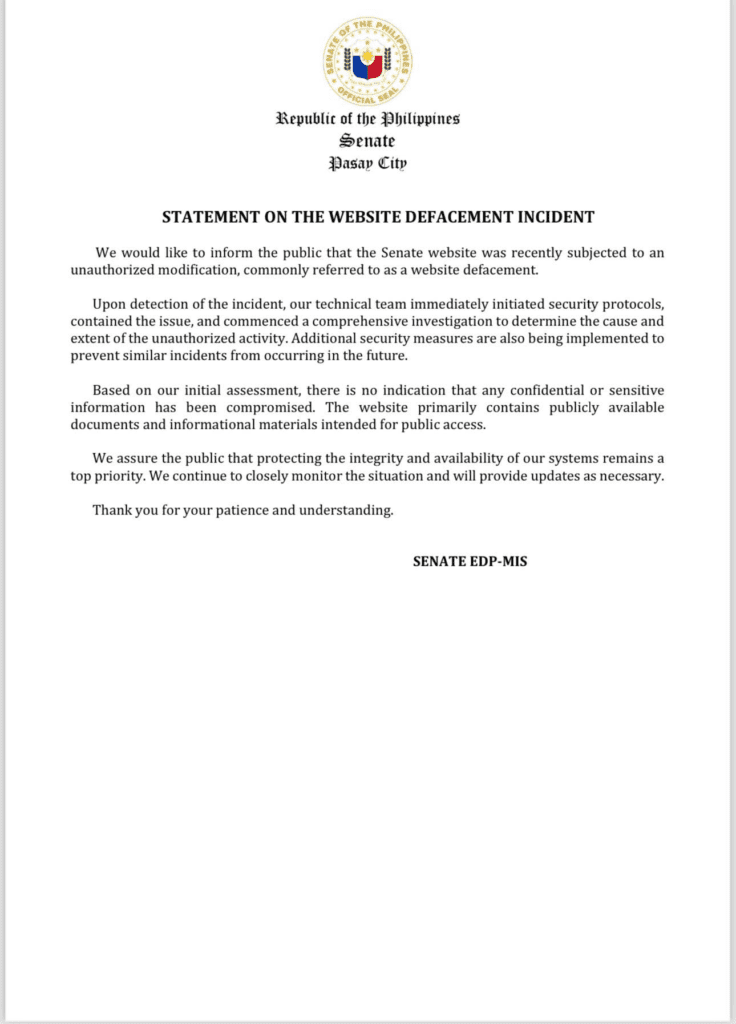
The Senate released an official statement acknowledging the incident.
According to the statement, the Senate’s technical team immediately implemented security protocols, contained the issue, and launched an investigation to determine the cause and extent of the unauthorized activity.
The Senate further stated that:
Based on its initial assessment, there was no indication that confidential or sensitive information had been compromised.
The statement also explained that the Senate website primarily contains publicly accessible documents and informational materials intended for public use.
Officials assured the public that protecting the integrity and availability of their systems remains a priority.
Nullsec Philippines’ Claim
A group identifying itself as Nullsec Philippines publicly claimed responsibility for the website defacement through social media posts.
The group published screenshots and messages expressing concerns related to transparency, accountability, and public trust.
At this time, these claims remain the group’s own statements. Authorities have not publicly released findings confirming the identities of those responsible.
As with many cybersecurity incidents, official attribution may take time and requires technical investigation.
Questions Raised About Website Security Spending
Following the incident, another topic emerged online.
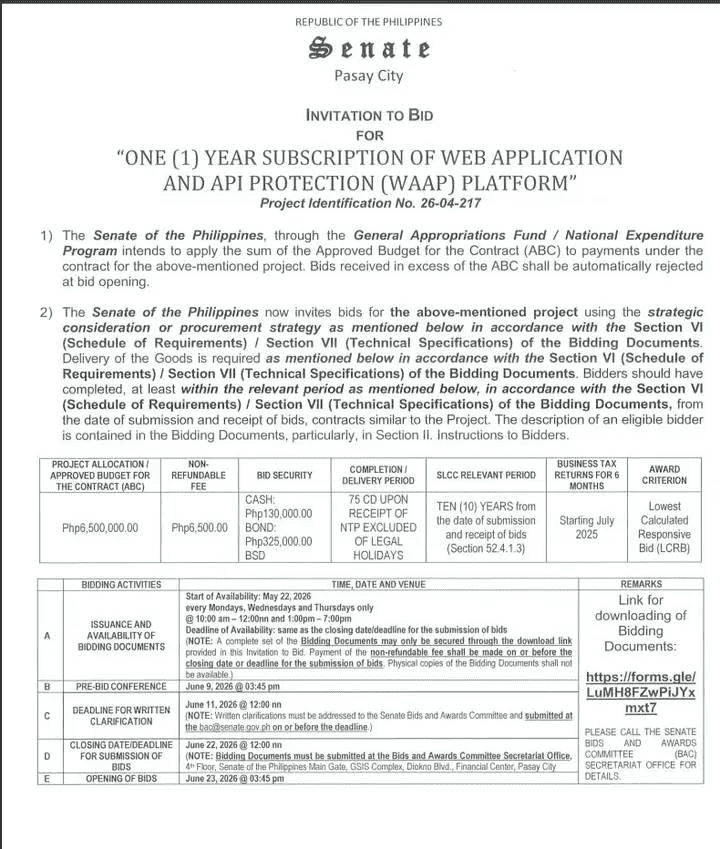
Screenshots of what appeared to be a Senate procurement document circulated on social media. The document referenced an Invitation to Bid for a one-year subscription to a Web Application and API Protection (WAAP) platform with an approved budget amounting to approximately ₱6.5 million.
This prompted questions from some netizens regarding government cybersecurity preparedness and whether existing safeguards were sufficient.
However, it is important to distinguish between public concern and established fact.
The existence of a cybersecurity procurement project does not automatically indicate that the incident occurred because of system failure, nor does it prove that security measures were ineffective.
Determining whether there were gaps in implementation, configuration, monitoring, or other factors requires the results of the official investigation.
Was Sensitive Information Compromised?
Based on the Senate’s initial assessment, there is currently no indication that confidential or sensitive information was compromised.
The website reportedly contains mostly public-facing information and documents intended for public access.
Nevertheless, cybersecurity investigations are often ongoing processes.
Authorities may release additional findings as more information becomes available.
Until then, it is important to avoid speculation and rely on verified updates.
Why This Incident Matters
Government websites play a critical role in public communication and access to information.
Even when incidents involve only website defacement, they can have broader implications, including:
Eroding public confidence;
Disrupting access to services;
Highlighting the importance of cybersecurity investments;
Raising awareness about digital vulnerabilities; and
Encouraging stronger security practices.
As more public services move online, protecting digital infrastructure becomes increasingly important.
Conclusion
The Senate website defacement incident has generated significant public interest and discussions about cybersecurity, transparency, and digital resilience.
At present, the confirmed facts remain clear: the Senate acknowledged the unauthorized modification of its website, initiated an investigation, and stated that its initial assessment found no evidence of sensitive data being compromised.
As investigations continue, further updates may provide a clearer picture of what happened and whether additional measures are needed to strengthen the security of government digital platforms.
For now, the incident serves as an opportunity to better understand the difference between website defacement and data breaches—and why cybersecurity matters to everyone in an increasingly connected world.