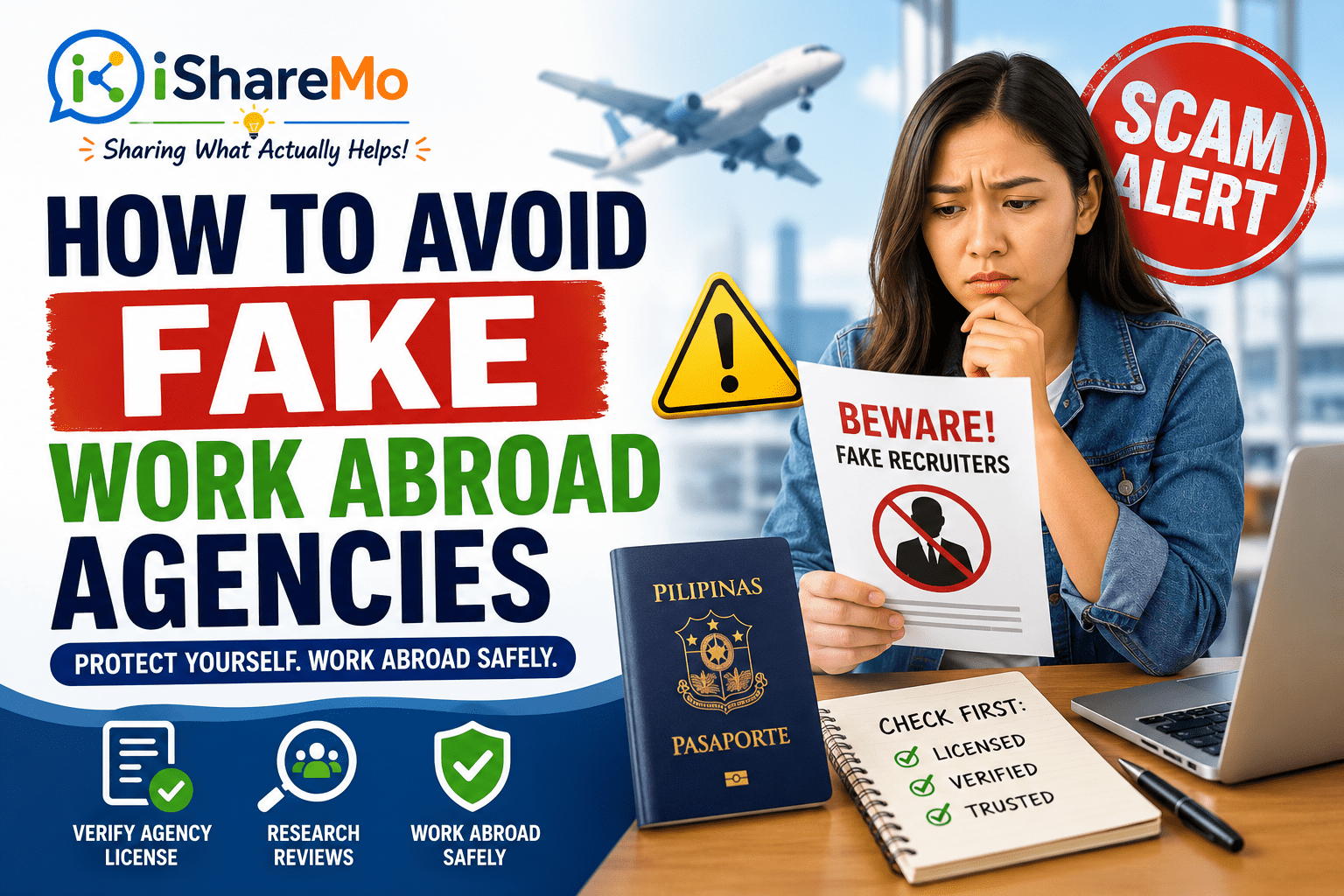
Learning how to avoid fake work abroad agencies in the Philippines applicants encounter online has become more important than ever. Many Filipinos searching for overseas opportunities end up becoming victims of illegal recruiters, fake agencies, and online job scams.
Scammers often target applicants who are eager to work abroad by promising high salaries, fast processing, and guaranteed jobs overseas. Some victims lose thousands of pesos after paying fake placement fees or submitting personal documents to unverified recruiters.
In this guide, you will learn how fake work abroad scams usually operate, common warning signs to watch out for, how to verify agencies properly, and safer ways to apply for overseas jobs online.
Quick Summary
How to avoid fake work abroad agencies in the Philippines starts with understanding how recruitment scams usually work. This guide explains the common warning signs of illegal recruiters, how to verify if an agency is licensed, and safer ways to apply for overseas jobs without risking your money or personal information. You will also learn why government verification matters before paying any fees or submitting documents to recruiters online. Proper research and careful verification can help applicants avoid scams and find safer overseas job opportunities.
Many Filipinos dream of working abroad because overseas jobs often offer better salaries and more opportunities for long-term financial stability. Unfortunately, scammers take advantage of this demand by creating fake job offers designed to attract desperate applicants.
Social media has made recruitment scams easier to spread because fake recruiters can quickly create pages, post fake success stories, and communicate directly with potential victims. Some scammers even pretend to represent legitimate agencies by copying names, logos, and office details from real recruitment companies.
Another reason these scams continue to grow is because many applicants rush applications without verifying agency information first. Exciting salary offers and promises of fast deployment often convince people to skip proper background checks.
Understanding how these scams work is important because fake recruiters are becoming more convincing every year.
Unrealistic Salary Offers Are a Major Warning Sign
One of the most common signs of fake work abroad agencies is unrealistic salary promises. Scammers often advertise extremely high salaries for jobs that normally do not pay that much.
For example, fake recruiters may promise very high monthly salaries for entry-level jobs that require little experience or qualifications. Their goal is to create excitement and pressure applicants into paying fees quickly before verifying the opportunity.
Legitimate overseas employers usually provide salary ranges that match actual industry standards and country requirements. Real recruitment agencies also explain contract details, job responsibilities, and qualification requirements clearly.
Applicants should become cautious whenever an offer sounds too good to be true.
Be Careful With Recruiters Asking for Immediate Payments
Another major red flag is recruiters demanding payment immediately after initial conversations. Fake agencies often pressure applicants to send money for processing fees, medical exams, reservation slots, or training before proper interviews or verification happen.
Many scammers request payments through:
Personal bank accounts
E-wallets
Money transfer services
Cryptocurrency
Licensed agencies normally follow proper payment procedures and issue official receipts for legitimate transactions.
Applicants should never feel pressured to pay immediately without confirming if the agency is officially licensed by the Department of Migrant Workers (DMW).
Why DMW Verification Is Extremely Important
One of the safest ways to avoid fake recruiters is verifying agencies through official government systems. The Department of Migrant Workers (DMW), formerly known as POEA, regulates licensed recruitment agencies in the Philippines.
Some applicants mistakenly believe that having a Facebook page or professional-looking website automatically means an agency is legal. Unfortunately, scammers can easily create convincing online profiles that appear legitimate.
Before applying for any overseas job, applicants should verify:
Agency license status
Approved job orders
Office information
Contact details
Recruitment legitimacy
Checking directly through official government sources is much safer than relying only on social media advertisements or recruiter messages.
If you are also searching for safer overseas opportunities online, our guide on “Legitimate Work Abroad Websites Philippines” can also help you identify trusted job platforms.
Social Media Recruitment Requires Extra Caution
Many overseas job opportunities are now promoted heavily on Facebook groups, Messenger, TikTok, and other social media platforms. While some licensed agencies use social media for marketing, scammers also operate aggressively on these platforms.
Fake recruiters often post screenshots of fake visas, fake flight tickets, and copied success stories to make their offers look convincing. Some even use stolen photos from real OFWs to create fake testimonials.
Applicants should avoid trusting recruiters based only on online popularity or large follower counts. Fake pages can buy engagement, fake reviews, and fake followers to appear credible.
The safest approach is still independent verification through official government records.
Never Send Important Documents Too Quickly
Many applicants unknowingly expose themselves to identity theft by sending personal documents too early in the process.
Scammers sometimes request:
Passport copies
Valid IDs
Birth certificates
Personal photos
Bank details
These documents may later be used for fraudulent activities or identity-related scams.
Before submitting sensitive documents, applicants should first confirm the legitimacy of the agency and understand why the documents are being requested.
Legitimate recruitment agencies usually follow more organized and transparent application processes.
Why Office Verification Still Matters
Even though many applications now happen online, physical office verification is still important.
Legitimate recruitment agencies usually have:
Registered office locations
Official contact numbers
Business permits
Professional staff
Transparent recruitment procedures
Scammers often avoid face-to-face meetings or provide suspicious excuses for not allowing office visits.
Applicants should become cautious if recruiters only communicate through personal accounts or refuse proper verification requests.
Researching the Destination Country Is Also Important
Applicants should not focus only on the recruiter. Researching the destination country and job conditions is equally important before accepting overseas work offers.
Understanding salary expectations, working conditions, visa requirements, and labor protections can help applicants identify unrealistic or suspicious job offers.
Some fake recruiters use fake country requirements or impossible job conditions to trick applicants who are unfamiliar with overseas employment systems.
The more informed applicants are, the easier it becomes to identify suspicious recruitment practices.
Why Careful Research Protects Applicants
Applying for overseas jobs is a major financial and personal decision. Rushing applications without enough research increases the risk of scams, financial loss, and unsafe employment situations.
Careful verification helps applicants avoid illegal recruitment schemes while improving their chances of finding safer and more legitimate opportunities abroad.
Taking extra time to verify agencies, research employers, and understand recruitment procedures can prevent serious problems later.
Safer overseas applications always start with proper information and careful decision-making.
Conclusion
Learning how to avoid fake work abroad agencies in the Philippines is extremely important for safer overseas job applications. While many legitimate opportunities exist, fake recruiters continue targeting Filipinos through social media, fake websites, and illegal recruitment schemes.
Verifying agencies through official government systems, avoiding suspicious payment requests, and researching recruiters carefully can help applicants protect themselves from scams. Legitimate recruitment processes should always be transparent, organized, and properly documented.
Working abroad can provide life-changing opportunities, but careful research and proper verification should always come first before accepting any overseas job offer.
FAQs on How to Avoid Fake Work Abroad Agencies in the Philippines
How can I verify if a work abroad agency is legal?
You can verify agencies through official Department of Migrant Workers (DMW) records and approved job orders.
Are Facebook job offers always fake?
Not always, but applicants should still verify recruiters independently before trusting overseas job advertisements online.
Should applicants pay placement fees immediately?
No. Applicants should verify agency legitimacy first before paying any recruitment or processing fees.
What is the biggest warning sign of fake recruiters?
Unrealistic salaries, rushed payments, and refusal to provide proper verification are common red flags.
Can fake recruiters create professional websites?
Yes. Some scammers create convincing websites and fake agency pages to appear legitimate online.
Why is DMW verification important?
DMW verification helps applicants confirm whether recruitment agencies and job orders are officially licensed.